Projects

GeoTend
GeoTend is a startup I founded with my roommate in college. After attending a large university for a few years, we noticed a trend: a lot of professors take attendance and none of them had a good method for doing it. So, we developed GeoTend, a revolutionary automated, location-based attendance taking system. By leveraging several cutting edge technologies, we were able to save time for professors, students, and teaching assistants, all while increasing the accuracy of attendance metrics.
Ionic Framework, Angular, AWS API Gateway, AWS Lambda, DynamoDB, Firebase Cloud Messaging
Due to the proprietary nature of this project, the source code cannot be released

Philips Hue Lights Chrome Extension
Philips Hue Lights are a popular brand of smart lights. Philips provides a mobile app, skills for Amazon Alexa and Google Home, as well as some other integrations to control the lights. When I installed them in my home office I realized I didn't want to have to pull my phone out whenver I wanted to change the light settings, so I accessed their API in a Chrome extension so I can seemlessly interact with my lights without breaking productivity.
Web extensions, REST APIs, AJAX

Maintenance Text Classifier
This was the large project I worked on while interning at Boeing. Unfortunately, to protect Boeing proprietary information, I cannot go into too much detail about this project. I used Machine Learning and Natural Language Processing to classify textual aircraft maintenance data into several different sentimental categories for use on a production application.
Python, TensorFlow, Word2Vec, pandas, numpy
Due to the proprietary nature of this project, the source code cannot be released
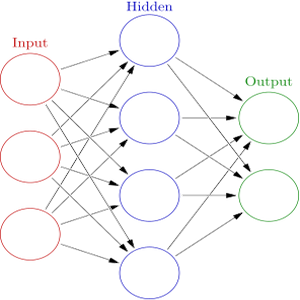
Neural Network Implementation
This was a project I did in the graduate-level computational intelligence class at the University of Missouri. This project is a manual, Python implementation of the multi-layer perceptron model, more commonly known as a neural network.
Python, Machine Learning Algorithms

Music Visualizer
This was a mid-semester project for Object Oriented Programming I. The assignment was to use a Java library that breaks down audio files into different numerical representations and then use those representations to display a design on the UI that reflects what is happening in the music.
Java, JavaFX, SceneBuilder
View Source Video Demo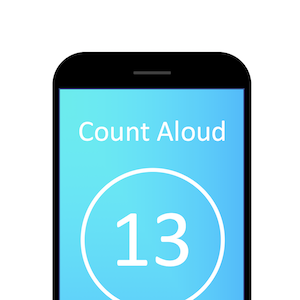
Single Breath Count Test
This was the large project a fellow intern and I worked on while interning at Cerner. SBCT app, for short, is an Android app that aids patients with conditions which impair their ability to breathe. We controlled the entire lifecycle of the project: initial requirements meetings with stakeholders, technical design, implementation, testing, and deployment.
Java, Android Studio, Gradle, UI/UX Design
Due to the proprietary nature of this project, the source code cannot be released
OOP Language Comparison
This was my final project for Object Oriented Design. The goal of the project was to compare two object-oriented programming languages in dozens of different facets. This project compares two newer languages: Swift and Kotlin. This project was interesting because these are the flagship languages now for iOS and Android development.
Swift, Kotlin, Markdown
View Project
Card Counting Toolkit
This tool simulates card-counting in blackjack for the purpose of data analytics. The program will completely simulate a blackjack game as well as a person who is counting cards. The player AI will act according to basic card-counting principles as well as the dozens of configurable parameters set by the user. The simulation can be ran thousands of times and the results written to a local database where they can later be accessed.
Python, MongoDB
View Source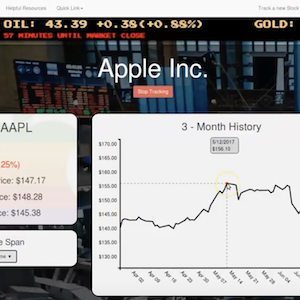
Stock Watcher
This was an application I developed in partnership with a fellow intern from my time at Cerner Corportation. The app uses live stock data from the Yahoo! Finance API to display the latest price data to users for the particular stocks that they have decided to "watch" on their dashboard. The information is displayed in variable-length line charts developed with a native JavaScript charting library.
Ruby on Rails, PostgreSQL, d3.js, jQuery, EC2, NGINX
View Source Video Demo
Contact Helper
This was a final group project for Introduction to Database Systems. This project demonstrates the full range of CRUD operations necessary for web applications to interact with a database. The app allows user to create an account, login, and perform any operations they wish concerning their contacts. It uses modern concepts such as a modified MEAN-stack and a material-design css library.
Node.js, Angular, Express, MySQL, Materialize
View Source Video Demo
Hangman Game
This was my final project for Object Oriented Programming I. I found a list of 120,000 common English words off the internet, then wrote a script that cleaned the data, only kept words between 4 and 12 characters, and deleted proper nouns. The game then randomly selects a word for the game, and also has the ability for users to login and save their games locally.
Java, JavaFX, SceneBuilder, C, MySQL, JDBC, Object Serialization
View Source
Casino Simulator
This was my final project for Advanced Algorithm Design and Analysis. The program will simulate a couple popular casino games, namely blackjack and video poker. The program is completely done through a command line interface and features advanced data structures such as a circular linked-list, custom hashing functions, and custom implemented hashed arrays using chaining to resolve collision.
C, makefiles, Advanced Data Structures
View Source